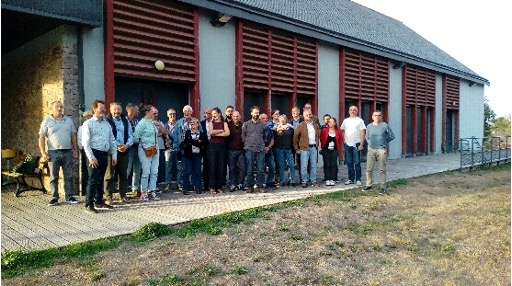
Eight municipalities in the north of the Pays de Redon have joined forces to explore the potential for renewable energy production on public property. Together, they are looking at opportunities for photovoltaic installations on public building rooftops, PV shading structures on public land and ground-mounted PV installations.
Working across several local authorities offers clear advantages. By joining forces, the municipalities can increase the number of potential installations and meet the electricity needs of a larger number of people. It also creates opportunities for municipalities that may not have suitable public buildings of their own. A building might, for example, be too small or poorly oriented for solar panels. Through a local collective self-consumption loop, these municipalities could still benefit as consumers from electricity generated by neighbouring local authorities.
To support this cooperation, the eight municipalities created a legal entity in January 2025 called “Du Canut à l’Oust” (ECO).
They are supported by three local organisations that provide technical and financial expertise: Energiv, the Ille-et-Vilaine electricity distribution network; Enercoop, a cooperative supplier of electricity from renewable sources; and EPV, a local association promoting community-led renewable energy initiatives.
An important ambition from the start was also to involve local residents who wanted to actively contribute to the project.
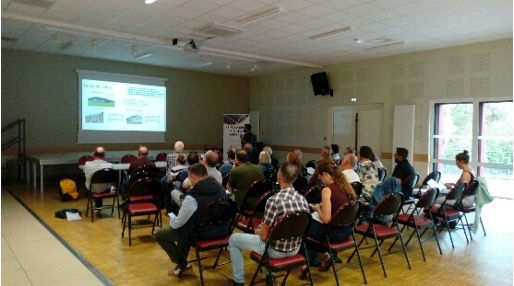
Eighteen months later, that ambition is clearly taking shape.
At the annual board meeting on 18 September 2026, the partners reflected
on the progress made so far. Citizens have found a real place within the project:
today, around 40 people are actively involved, and together they have raised
€85,000 in citizen donations.
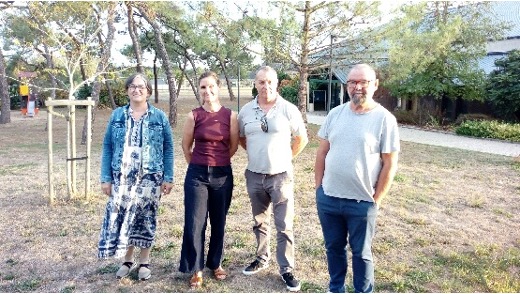
The citizens have also elected five representatives, two women and three men,
to take part in the steering and board committee alongside the other stakeholders.
The number of citizens involved continues to grow, showing that energy issues
are attracting strong local interest. Some participants have also developed their knowledge and skills very quickly and now play a role that is just as important as that
of the elected representatives who have been involved since the beginning of the project.
The ECO stakeholders have chosen a business model based on collective self-consumption. The self-consumption loops will be open to municipalities, businesses and individuals.
Municipalities are committing to consuming the electricity they generate, helping to ensure the long-term sustainability of the model. Through collective self-consumption, the project aims to offer stable and competitive electricity tariffs over the long term.
The experience developed within ECO is already attracting attention beyond the project itself. Citizens involved in the initiative were invited by Energiv to share their story at a trade show, while the Brittany Region invited them to present their experiences during a webinar.
These opportunities reflect the vitality of the project and its ambition to inspire similar initiatives elsewhere. At the heart of this momentum is the successful partnership between municipalities, citizens and other local actors.
The partners are now looking forward to seeing the first installations become a reality. Design work for seven rooftops is close to completion, and the first orders for solar panels are expected to be placed in the coming months.