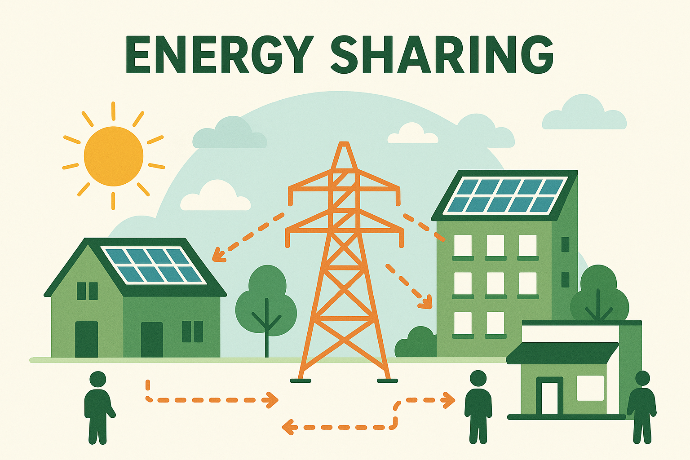
The framework conditions for renewable energy are currently undergoing profound change. In Germany and many European countries, government subsidies for rooftop photovoltaic (PV) systems, solar parks and agri-PV are being scaled back. The focus is shifting from reliable, long-term guaranteed feed-in tariffs towards self-consumption, energy sharing and direct marketing. Whilst this shift means less predictability for energy communities than under the old model, it also opens up new opportunities: they can use the electricity where it is needed, boost local economic value and achieve a social impact. This approach also promotes greater acceptance and participation, as members, citizens, local authorities and businesses benefit directly and identify more strongly with the projects. As energy communities are geared towards the common good rather than profit maximisation, they can adopt a long-term perspective and promote sustainable, stable business models. They can also achieve a social impact, for example through solidarity-based tariffs, free allocations or discounted kilowatt-hours. In this way, they can provide targeted relief to low-income households and help to reduce energy poverty.
However, as they transition towards increased self-consumption, energy sharing and direct marketing, energy communities face several challenges. On the one hand, market and price risks are considerable, as spot market prices fluctuate. On the other hand, both direct marketing and power purchase agreements (PPAs) require strong negotiation skills, sound data and active risk management. At the same time, processes and regulations are becoming increasingly complex. Energy-sharing models also require clear metering concepts, billing procedures that comply with data protection regulations, and accurate accounting. Grid access often presents a bottleneck, as many distribution networks operate close to their capacity limits and there is a lack of transparent and up-to-date information on available connection capacity. Where projects are not connected locally via a direct line, energy sharing depends on reliable access to the public electricity grid. Uncertain connection times and costs make investment decisions more difficult in this context.
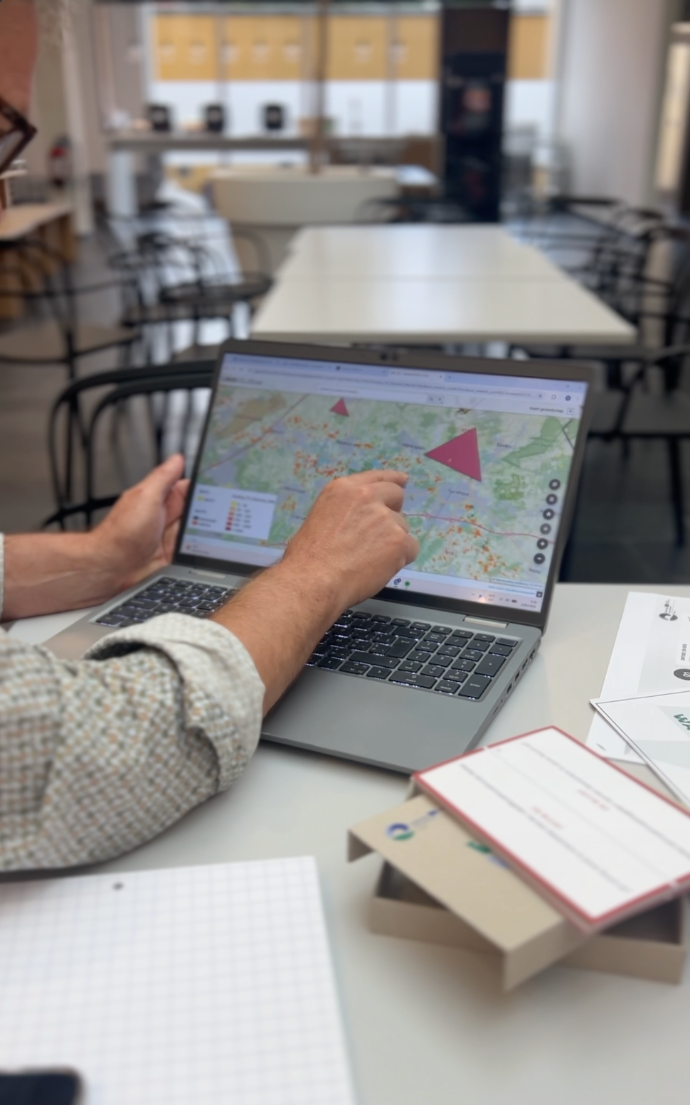
With the help of a structured approach and digital tools – such as the freely accessible CIRCUS tools for analysing energy demand and its coverage by local rooftop PV systems, local solar parks and agri-PV – local generation and demand can be matched. To create the necessary transparency regarding grid access and to facilitate cooperation with grid operators, the development of a publicly accessible grid simulation tool is urgently needed.
Tapping into the new business areas of energy sharing and direct marketing requires new skills and competencies, as well as an increased workload. However, as energy communities are organisations run entirely on a voluntary basis with limited time and technical resources, they cannot guarantee this in the long term. To ensure continuous development, it is essential that energy communities professionalise their operations and make use of the support of external specialist firms. Merging with or collaborating with other energy communities can also facilitate this transition. Professionalisation also enables the implementation of larger and more complex projects such as ground-mounted solar parks, wind turbines and local district heating networks.
In summary, the transition from fixed feed-in tariffs to higher self-consumption,
as well as to energy sharing and direct marketing, presents new challenges for energy communities. At the same time, it offers them the opportunity to capitalise on the changed framework conditions by professionalising their structures and processes.
Through mergers, partnerships and professional external support, they can also reposition themselves sustainably as local energy suppliers for citizens, local authorities and businesses. Furthermore, they can develop business models that create local and social added value. Energy communities can thus use the changed regulatory framework as a catalyst for their transformation.