On every farm, energy runs like an invisible vein through daily operations. It is indispensable, but also costly and increasingly complex. What used to be a simple yearly contract review has evolved into a full-fledged management decision. Some farmers consciously continue to focus on comparing energy suppliers, while others choose to also produce and store energy themselves through solar panels, wind turbines or batteries. But do farmers truly understand what these choices mean today? And do they have sufficient insight into the rules of an energy market that is changing at lightning speed? Energy cooperative Farmpower observes that the answer is often less obvious than one might think.
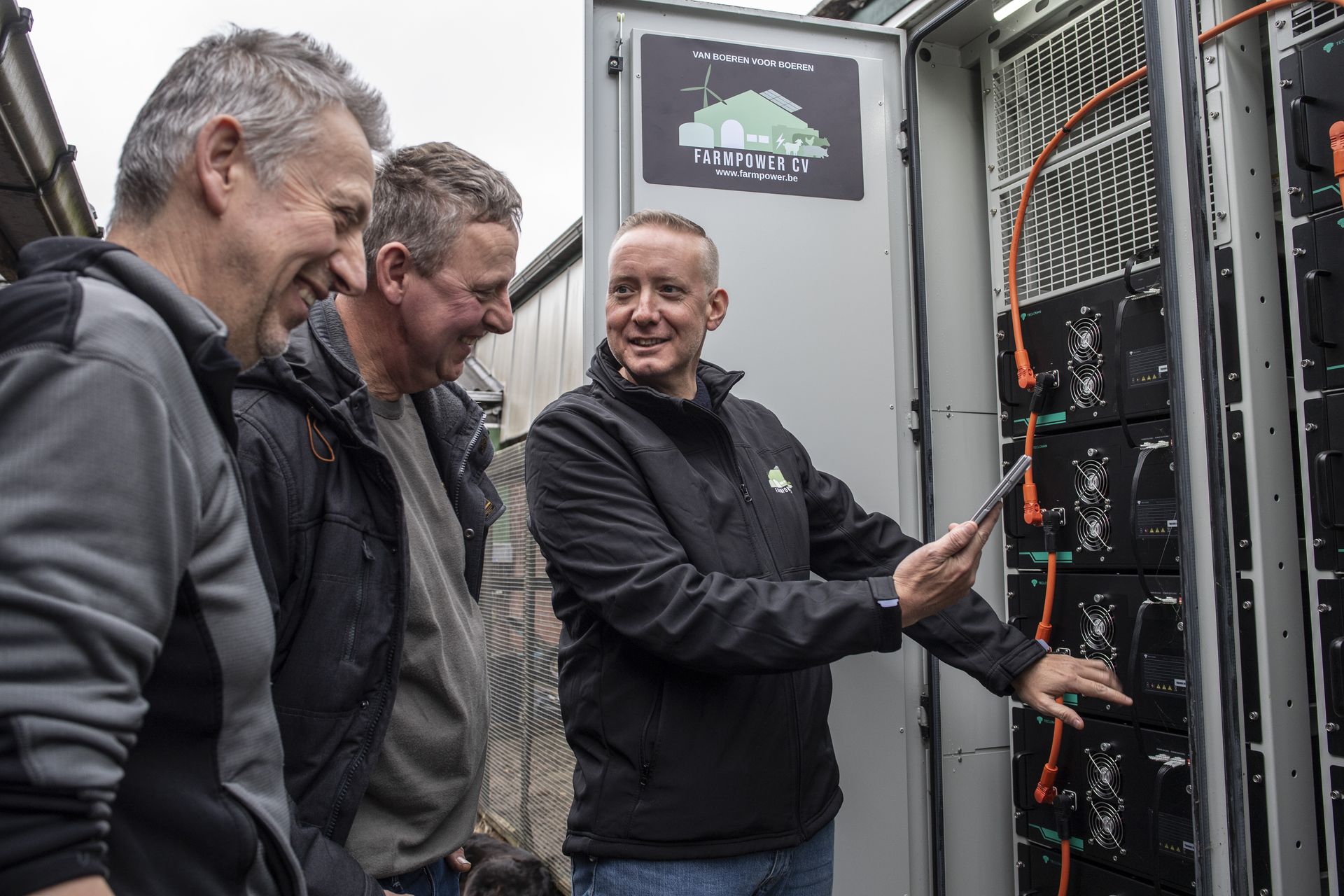
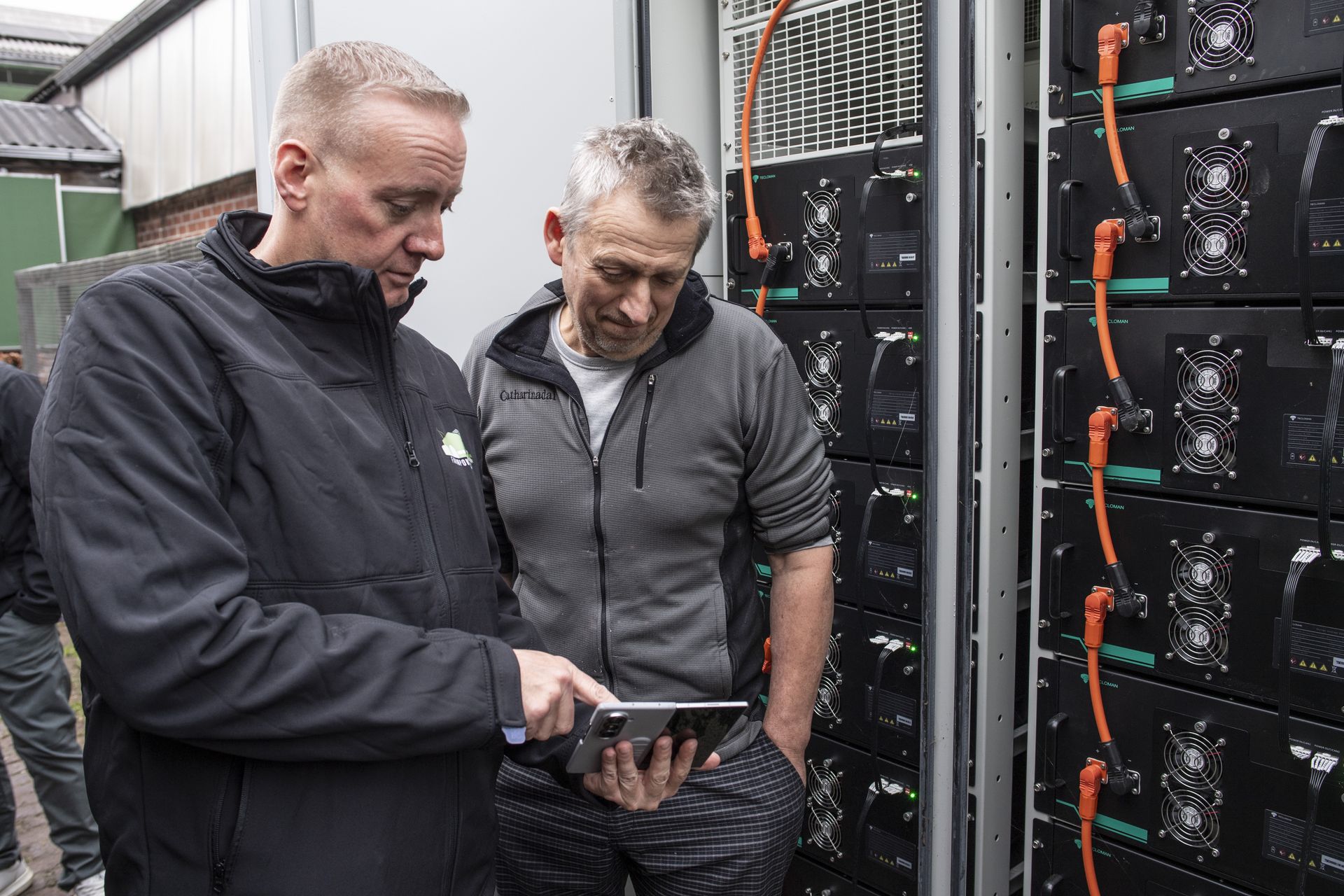
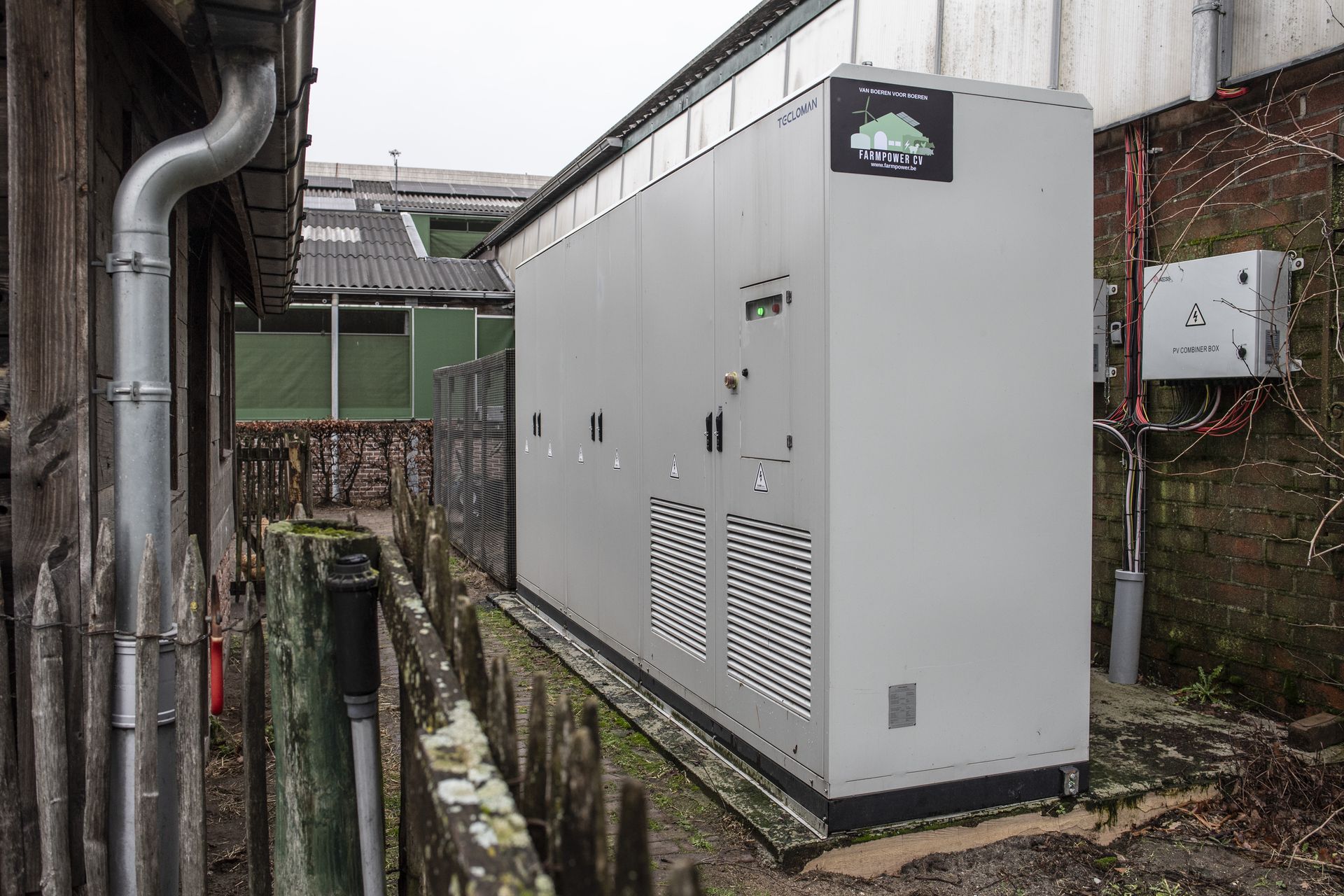
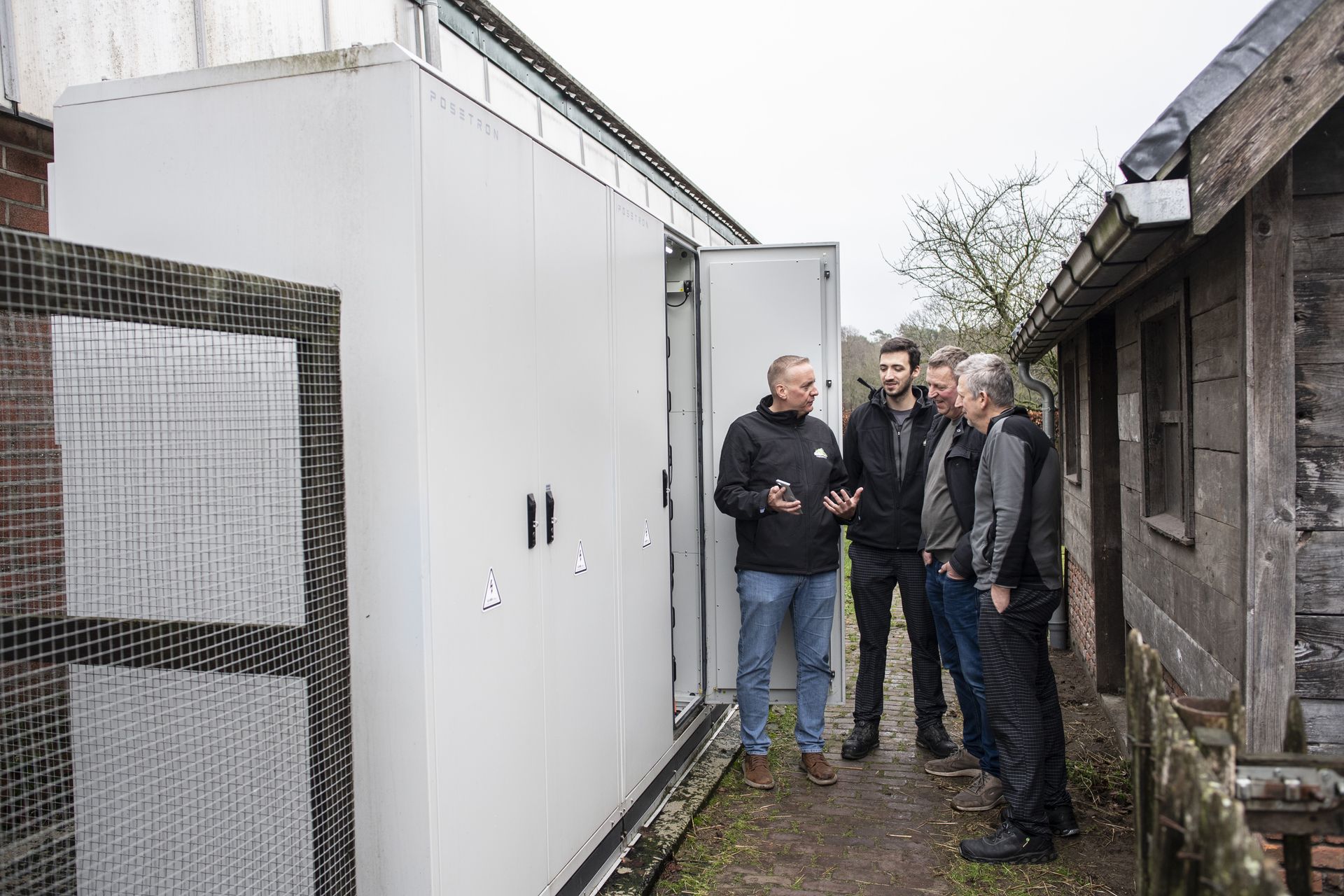
Take storage batteries as an example. In recent years, many farmers invested in this technology with high expectations. During the energy crisis and the period that followed, batteries generated exceptional returns. That was also the moment when, across the sector, the signal was clear: investing could be interesting.
“That message didn’t come out of nowhere,” says Berend Beekhuis, founder and board member of Farmpower. “At that time, it was profitable. Many batteries were operated on the imbalance market, where you respond to price fluctuations every fifteen minutes. In 2023 and 2024, those revenues were extremely high. Since then, European electricity markets have become more interconnected. As a result, those extreme price peaks have flattened out — and those peaks were exactly what used to generate high returns. Today, revenues have more than halved. What seemed normal back then was actually exceptional.”med normal back then was actually exceptional
What is the imbalance market and why is it so volatile?
At every moment, the amount of electricity on the grid must match consumption. If this balance is disrupted — for example due to sudden sunshine or a spike in demand — an imbalance occurs. On the imbalance market, this deviation is corrected every fifteen minutes. Batteries can earn money here by storing or supplying electricity at the right moment.
During the energy crisis and the period after, prices fluctuated dramatically. Those who were active at the time could generate high returns. Today, the situation is different. European electricity grids are far more interconnected. A shortage in one country is quickly compensated by electricity from another. As a result, large price peaks have largely disappeared, and revenues from imbalance have dropped significantly.
In addition to the imbalance market, batteries can also be deployed in other markets, such as the FCR market (Frequency Containment Reserve). In simple terms, the grid operator uses batteries as a kind of shock absorber for the electricity grid. When the frequency on the grid slightly rises or falls — something that happens continuously — a battery can automatically absorb or release a small amount of electricity. This happens constantly, in small quantities and fully automatically, helping to stabilise the grid without affecting the farmer’s daily operations.
FCR works differently from imbalance: it is not about responding to large price fluctuations, but about continuously stabilising the grid. The compensation is linked to availability, not volatility. Here too, revenues have declined. As imbalance becomes less profitable, larger players shift towards FCR, increasing pressure on that market as well. Today, no market offers guaranteed returns.
When the numbers disappoint
This reality is only now becoming visible on farms. Farmpower increasingly receives calls from farmers who compare their figures and are shocked.
“I recently spoke to a farmer whose energy bill increased by €14,000, while his battery only generated €11,000,” Beekhuis explains. “You do everything as it was presented to you — and still end up losing money.”
According to him, this disappointment is often reinforced by how many trajectories are structured.
“Many farmers have placed their battery, its control system and their energy contract with a single provider. That makes it very difficult to see where the money goes. Who controls your battery, who supplies your electricity, and who earns what and when? For many farmers, it remains a black box.”
In some cases, farmers are also tied to systems or contracts that are difficult to exit. Just when you realise things are not working as promised, adjusting becomes challenging.
Who does what in the energy chain?
Energy often feels like one single system: electricity, a meter, a bill, and perhaps solar panels or a battery. In reality, multiple roles are involved:
- The grid operator (in Flanders, Fluvius) manages cables, transformers and your connection. This is fixed — you cannot choose this. The operator also determines your connection capacity and intervenes in case of overload.
- The energy supplier sells electricity and compensates for surplus. Here, you do have a choice: fixed, variable or dynamic contracts.
- The control partner manages batteries and installations. They decide when your battery charges or discharges, for example to optimise self-consumption or participate in markets like imbalance or FCR.
- For some markets like FCR, an aggregator is involved. This party bundles multiple batteries into one virtual system and offers them on the market.
In practice, these roles are often combined: the same party supplies electricity and controls the battery. The battery installer usually collaborates with one or more control partners. Not every battery can be controlled by every provider, depending on brand and configuration. Switching later is often technically possible, but comes at a cost — typically several thousand euros for additional hardware.
Flexibility becomes a resource
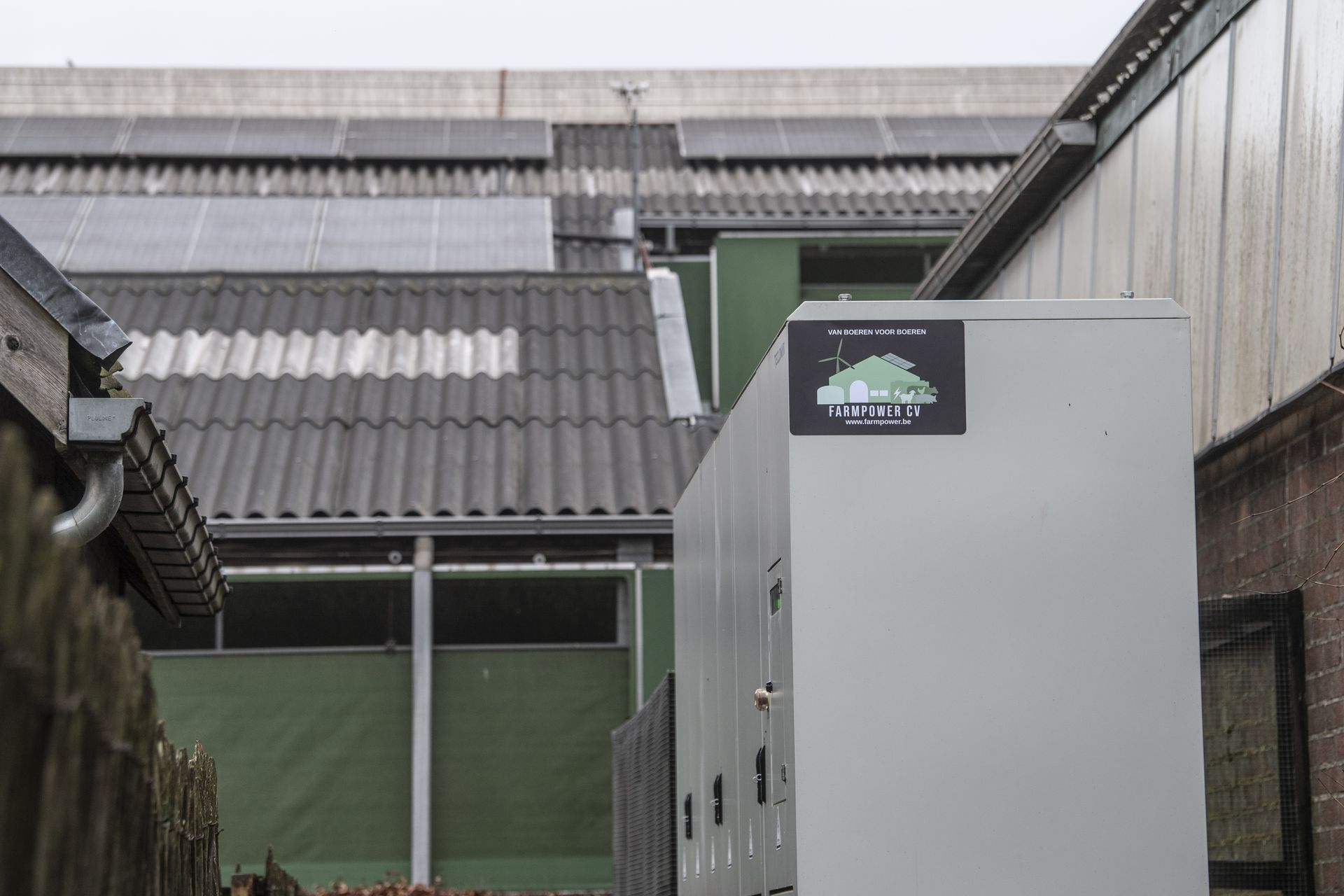
At the same time, another realisation is emerging: farms possess energy potential that will become increasingly valuable.
“We are heading towards grid congestion, also in Belgium,” says Beekhuis. “Everything is becoming more electric. Farm consumption is increasing due to automation. On top of that, millions of electric cars will soon be charging simultaneously in the evening. The grid is not prepared for that.”
This is where farmers can play a key role. Farms with solar panels, wind energy and batteries possess something that will become scarce: flexibility.
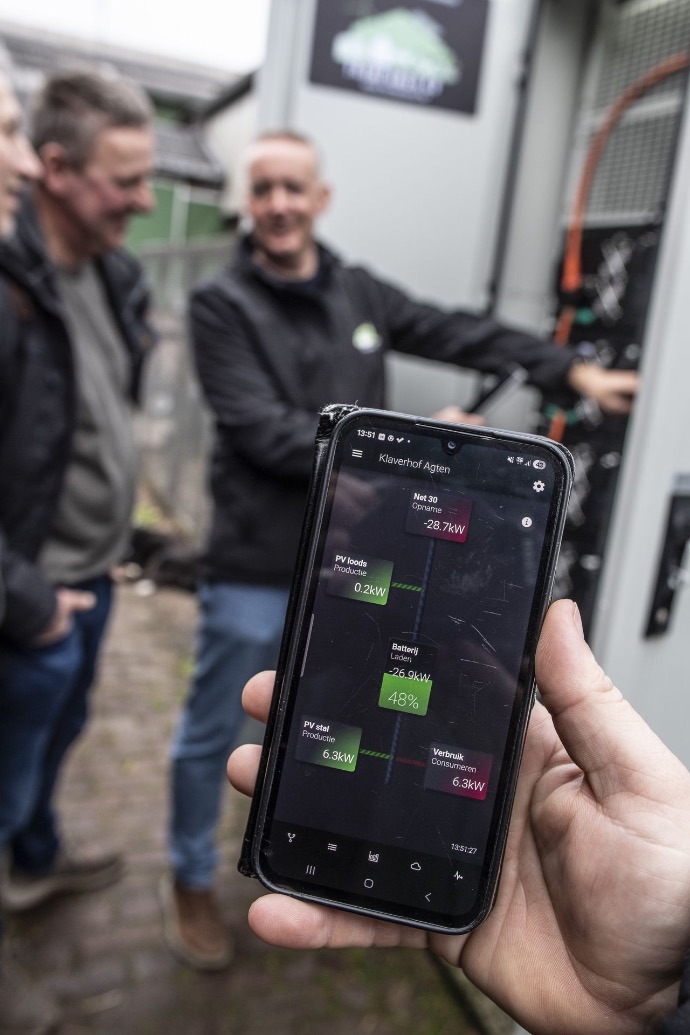
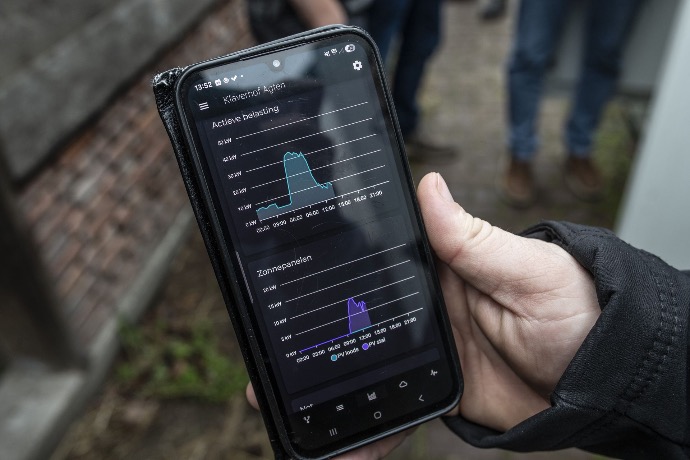
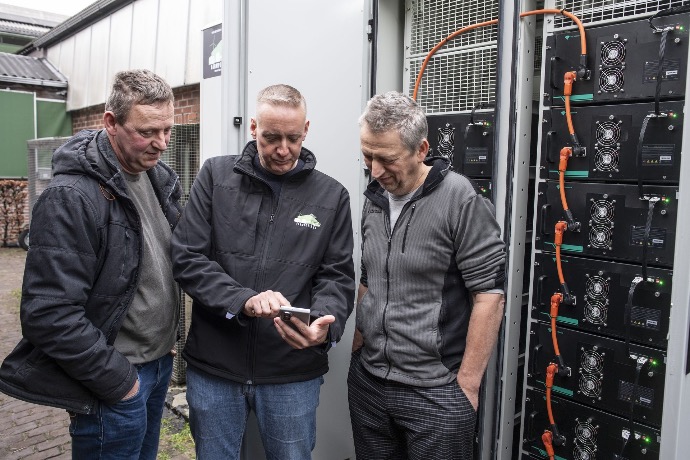
“We have space, installations and often already a battery,” says Bram Agten. “You realise you are no longer just an end user. You can actively work with energy: store it, shift consumption, wait. That puts you in a different position.”
According to Beekhuis, this shift is fundamental.
“You are not only a food producer or energy consumer, but also a contributor to grid stability. Flexibility becomes a resource.”
CIRCUS
This idea — that farmers can achieve more together than individually — also shapes Farmpower’s vision for the future. Energy goes beyond electricity alone. The cooperative also sees opportunities in fuels, heat and shared infrastructure.
In that spirit, Farmpower is involved in the CIRCUS Project, coordinated by Landelijke Gilden and Boerenbond. The project focuses on developing energy communities.
The starting point is simple: anyone who wants to organise energy collectively quickly faces questions. Where do you start? Which steps make sense, and in what order?
How do you avoid investing without seeing the bigger picture? CIRCUS provides structure, offering practical tools that guide groups step by step.
About Farmpower
Farmpower was founded in 2021 from the observation that farmers were each navigating an increasingly complex energy market on their own, while collectively representing significant volume. By bundling that volume, farms gain stronger negotiating power and more control over their energy policy.
Today, Farmpower brings together nearly 200 farms. The cooperative negotiates collectively with energy suppliers and works with Centrica Energy for battery control. Farmers remain free to choose whether to participate in collective contracts or services.
The board consists almost entirely of farmers and operates on a voluntary basis. Farmpower aims to bring transparency to a rapidly changing market and support farmers in building their energy strategy with insight and autonomy.