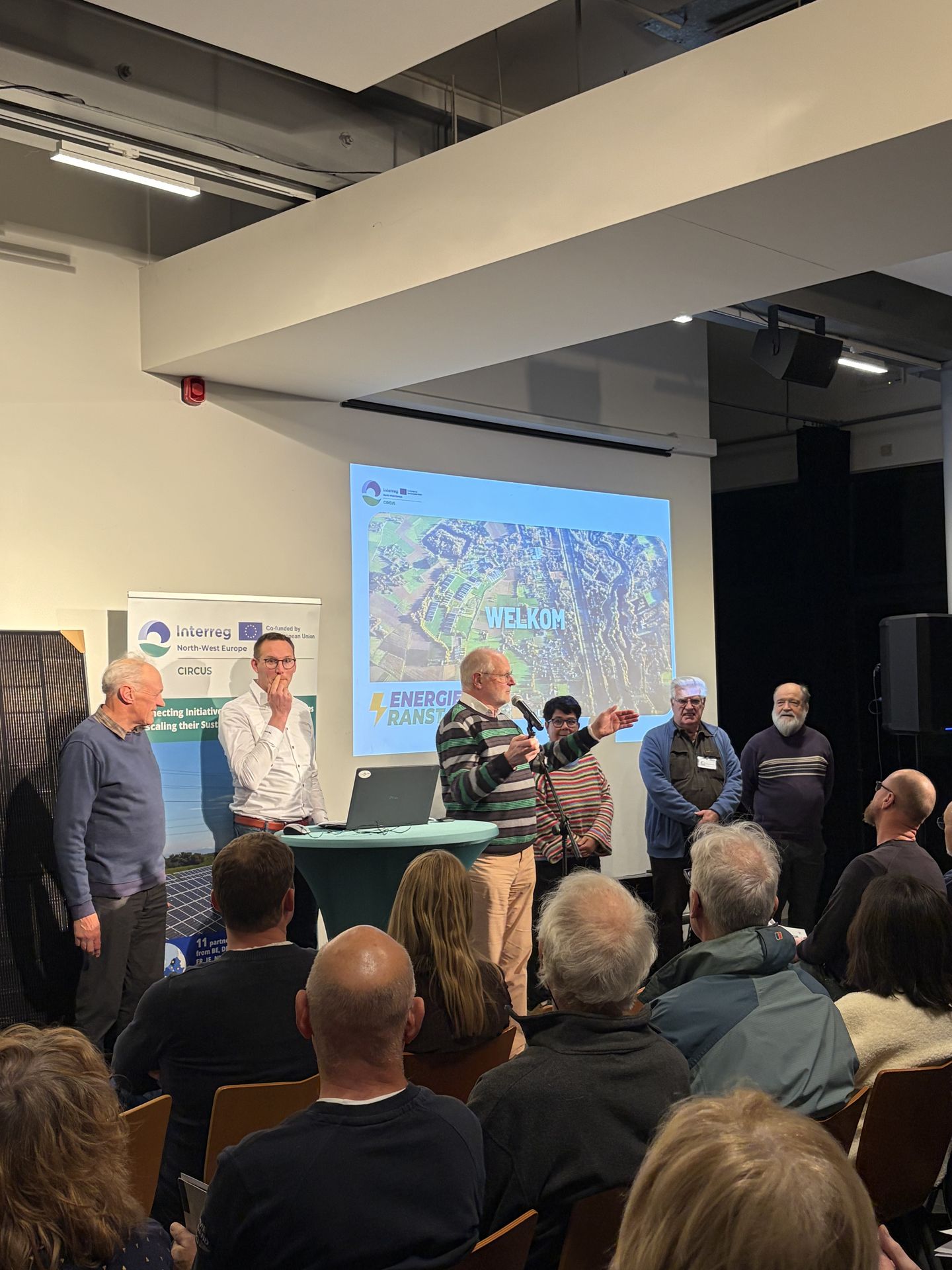
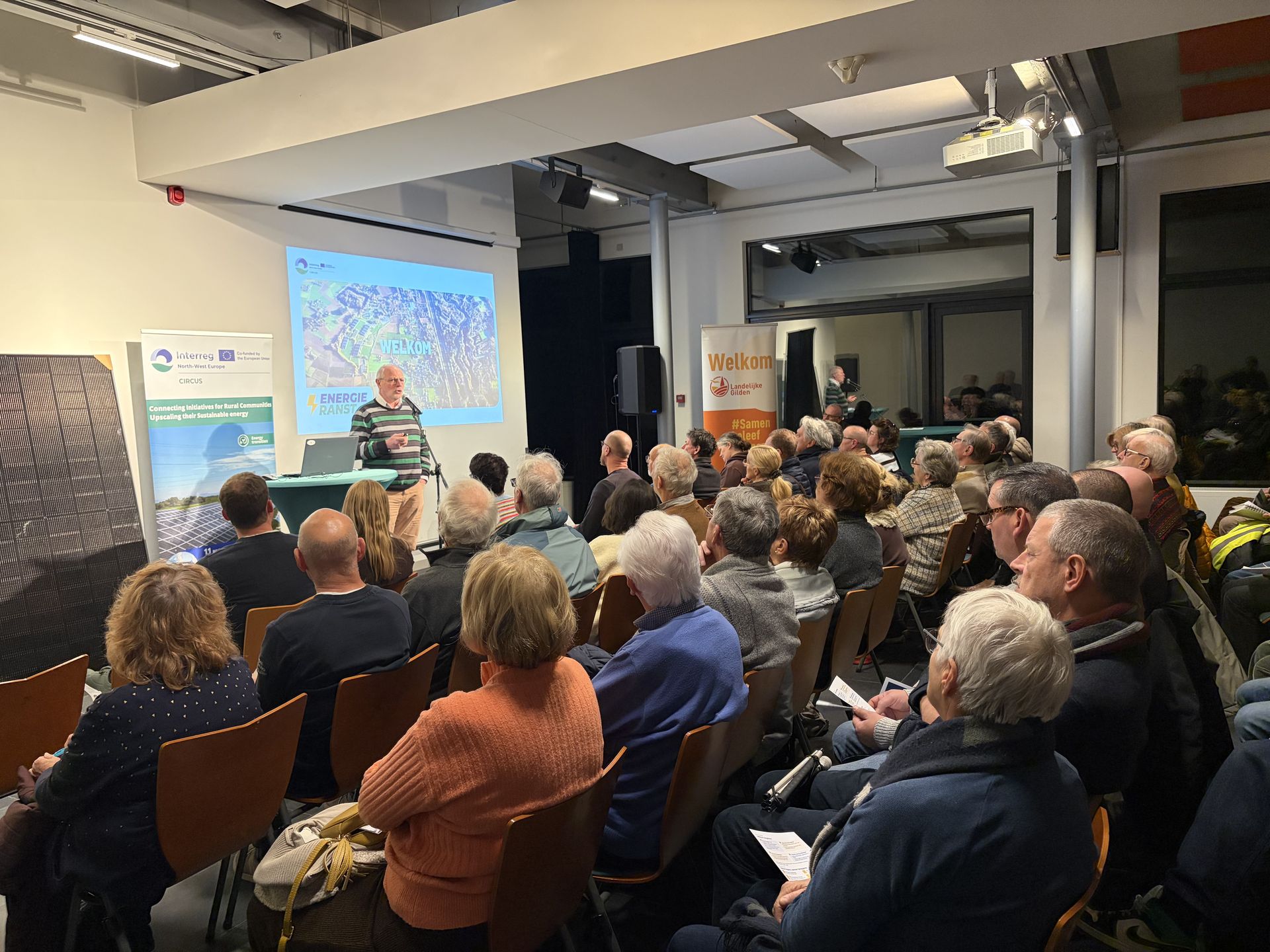
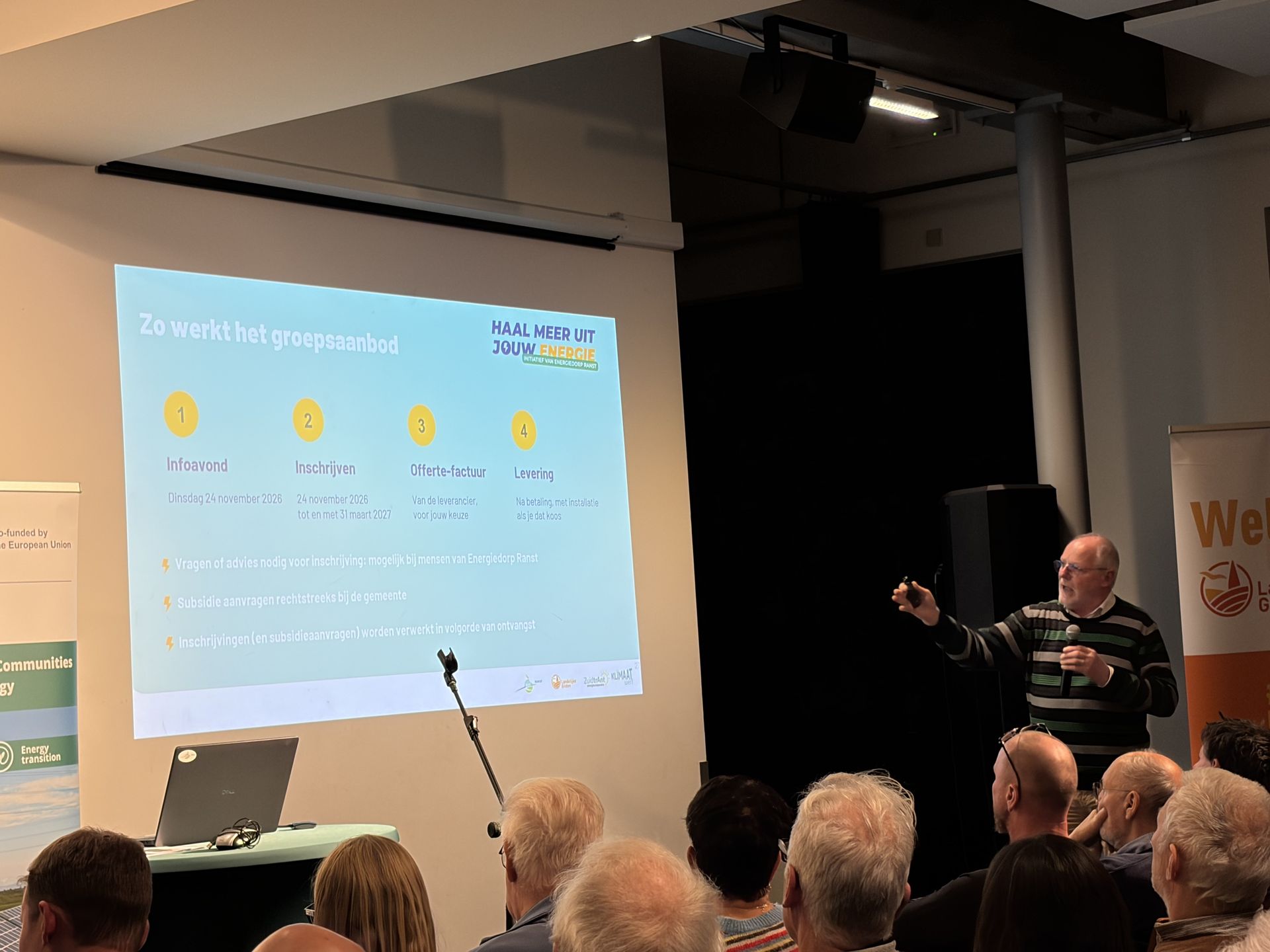
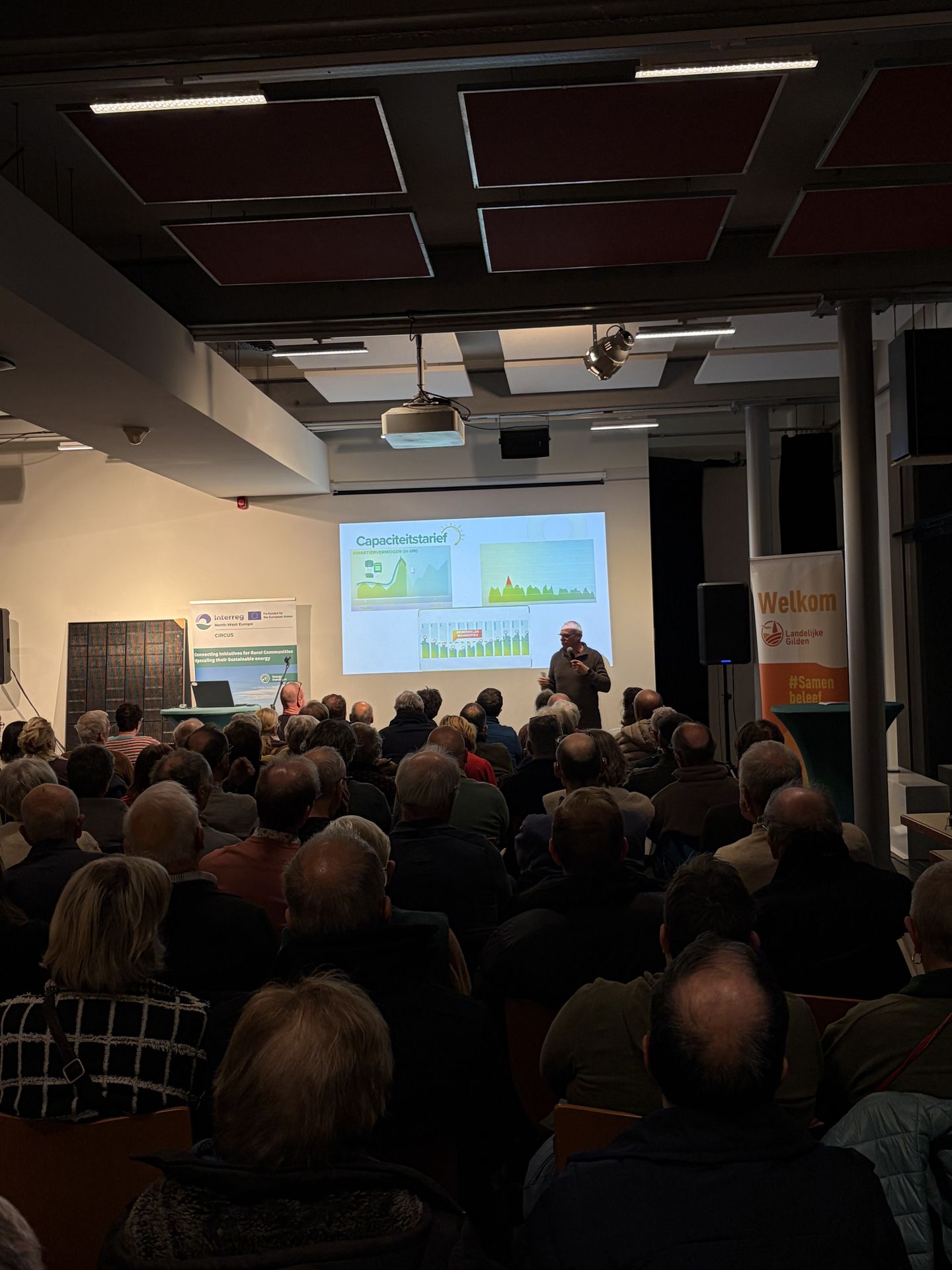
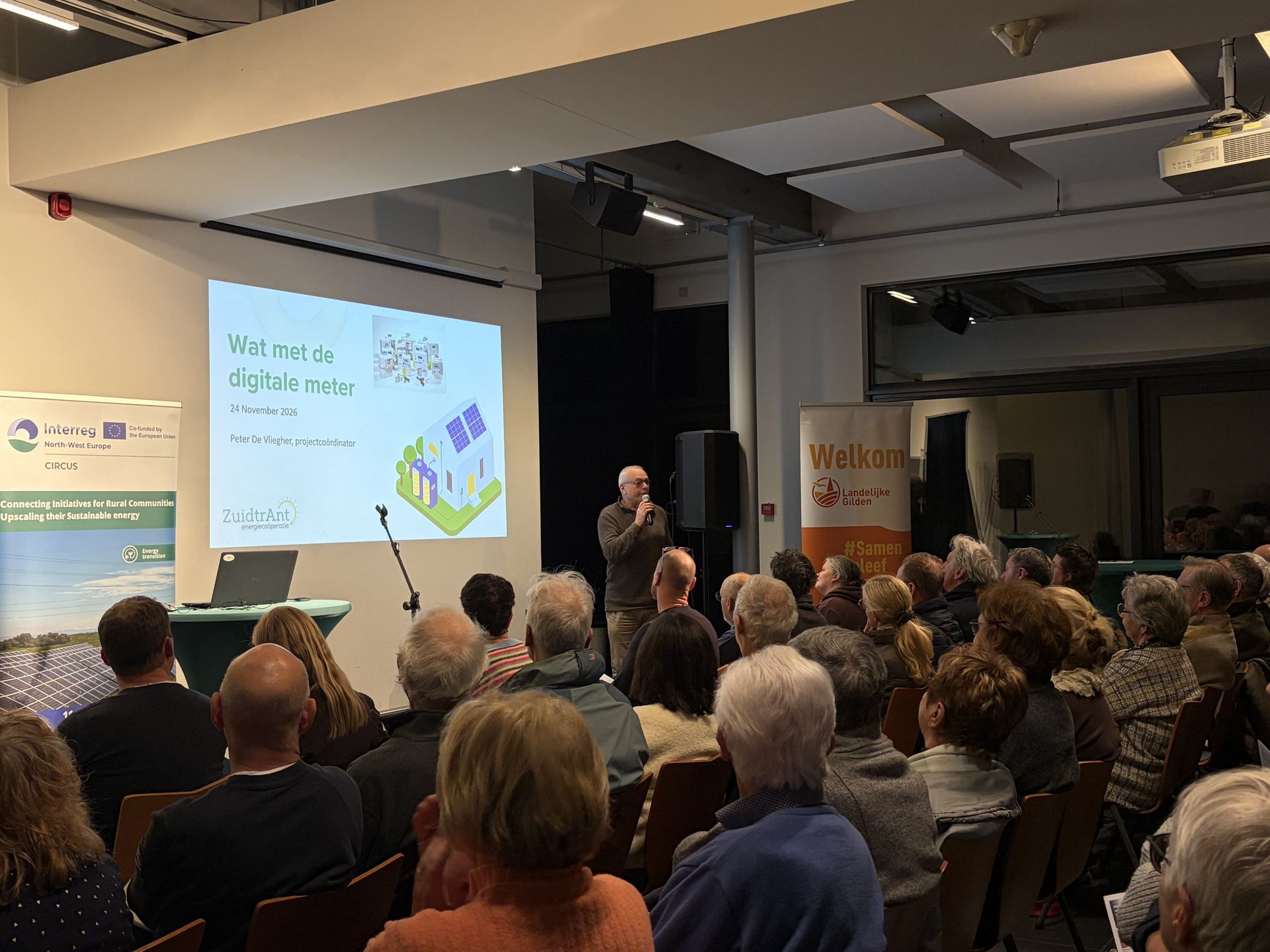
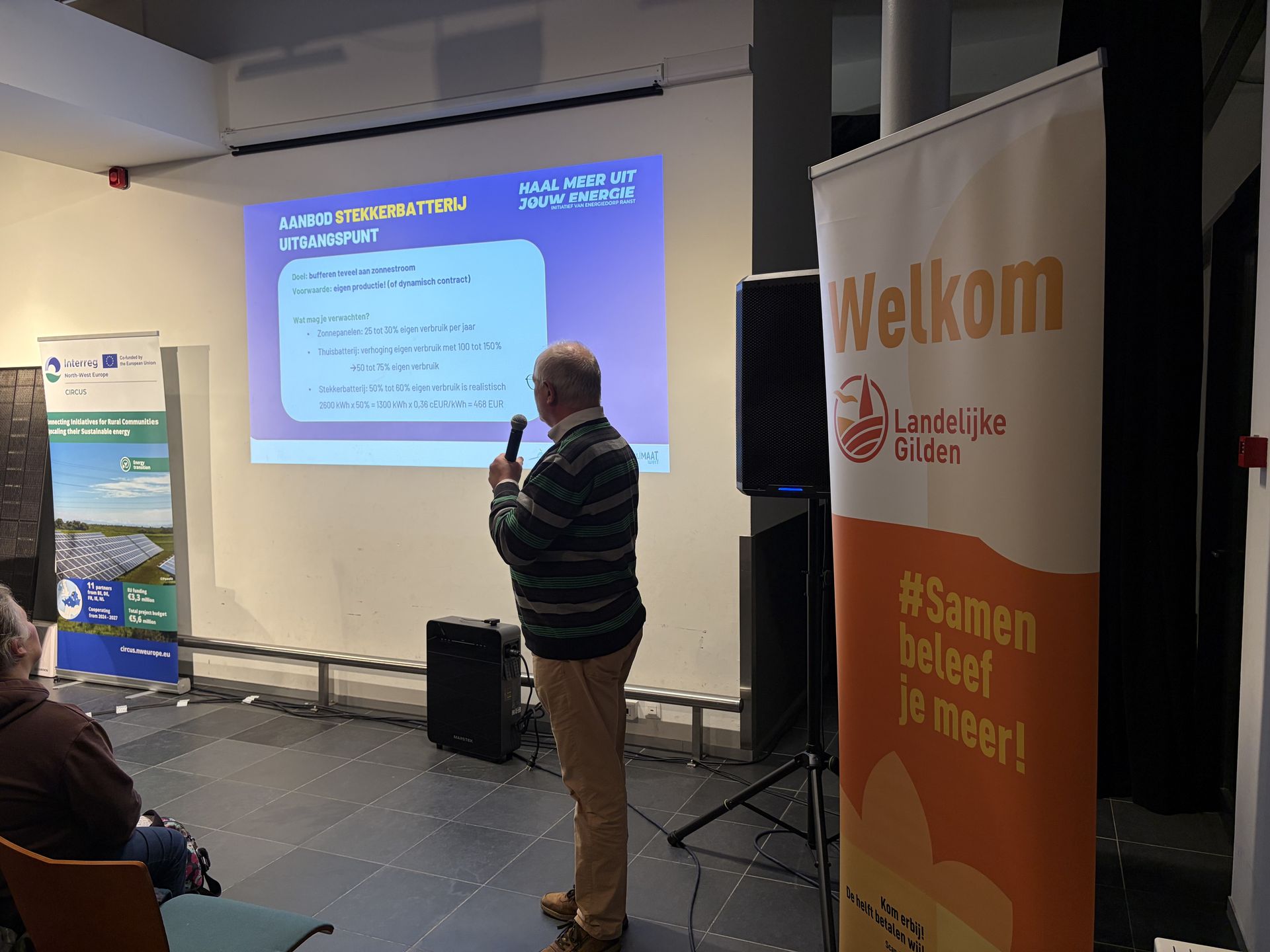
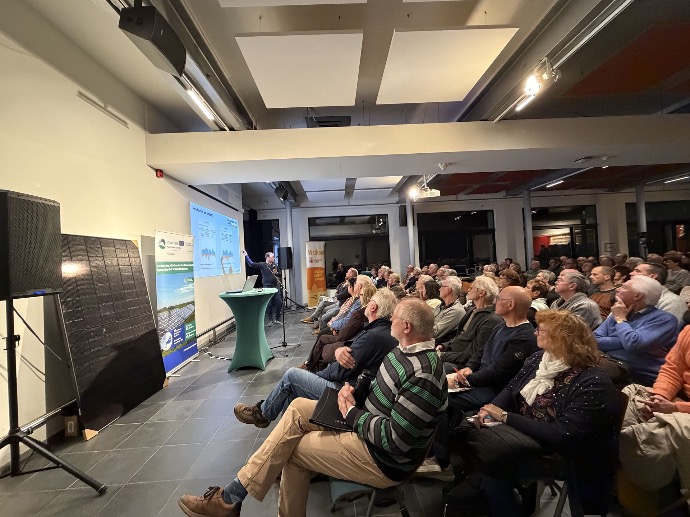
The organisers initially hoped for 50 participants. As interest grew, the room was expanded to accommodate 100. Registrations eventually had to close at 170. On 24 November 2026, GC Den Boomgaard in Ranst, Belgium, was packed for an evening that connected everyday energy questions with an initiative developed by local residents.
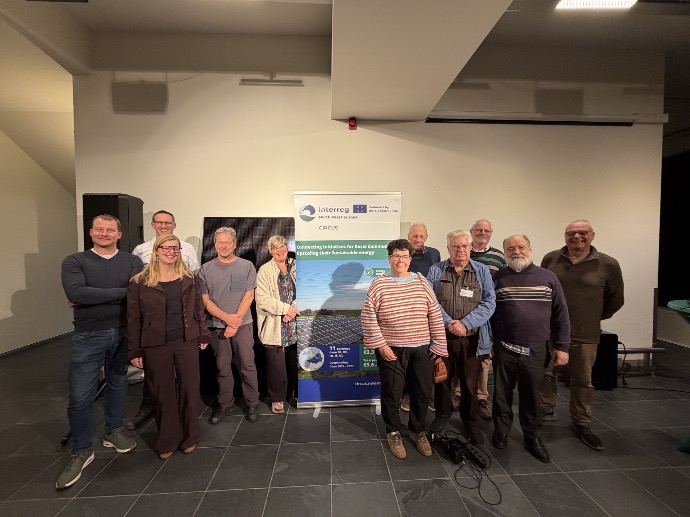
Behind that response was Energiedorp Ranst, one of the Belgian pilot communities in the Interreg North-West Europe CIRCUS project. With guidance from Landelijke Gilden and through the CIRCUS participatory method, its volunteers had developed a group purchase of plug-in solar panels and plug-in batteries. The evening brought their work to a much wider public.
Using the CIRCUS method to build
a shared initiative
Within the CIRCUS pilot in Ranst, volunteers used the project's participatory method and tools to examine local energy consumption and production, discuss priorities and explore possible actions. This process helped them turn their ideas into a concrete proposal to present to the municipality: a group purchase that would give other residents a practical opportunity to take part.
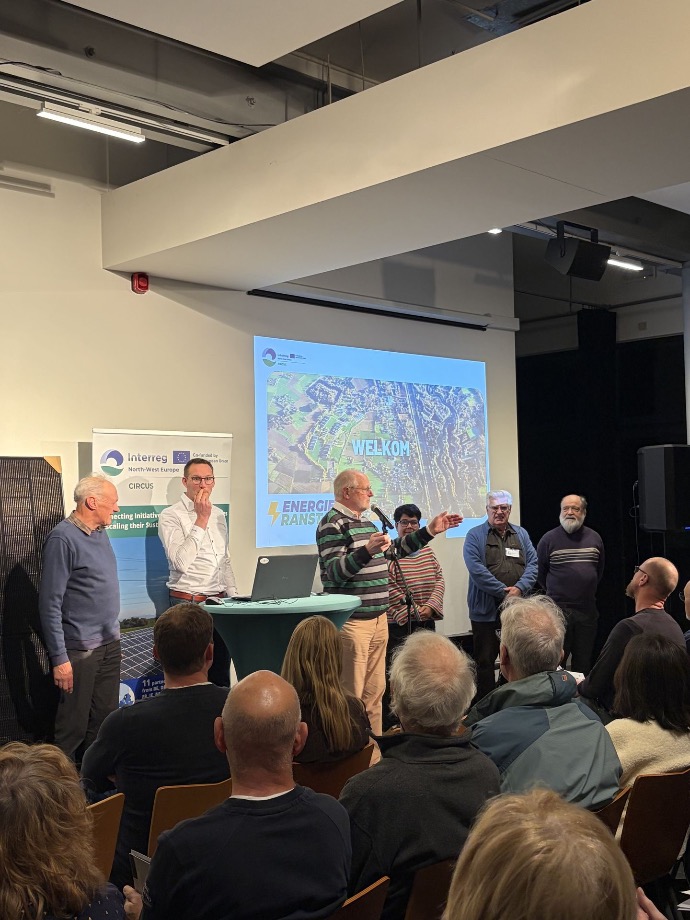
The proposal gave residents and the municipality a practical basis for working together. The volunteers contributed their local knowledge and commitment, while the municipality helped build support for the initiative and make it more accessible. The information evening took shape through that collaboration.
Landelijke Gilden guided the participatory process and helped connect volunteers, municipal representatives and specialist partners. As the organisation supporting this Belgian CIRCUS pilot community, it also helped prepare, organise and deliver the evening. Its role was to help residents move their proposal forward while keeping them actively involved in shaping it.
Making the digital meter easier to understand
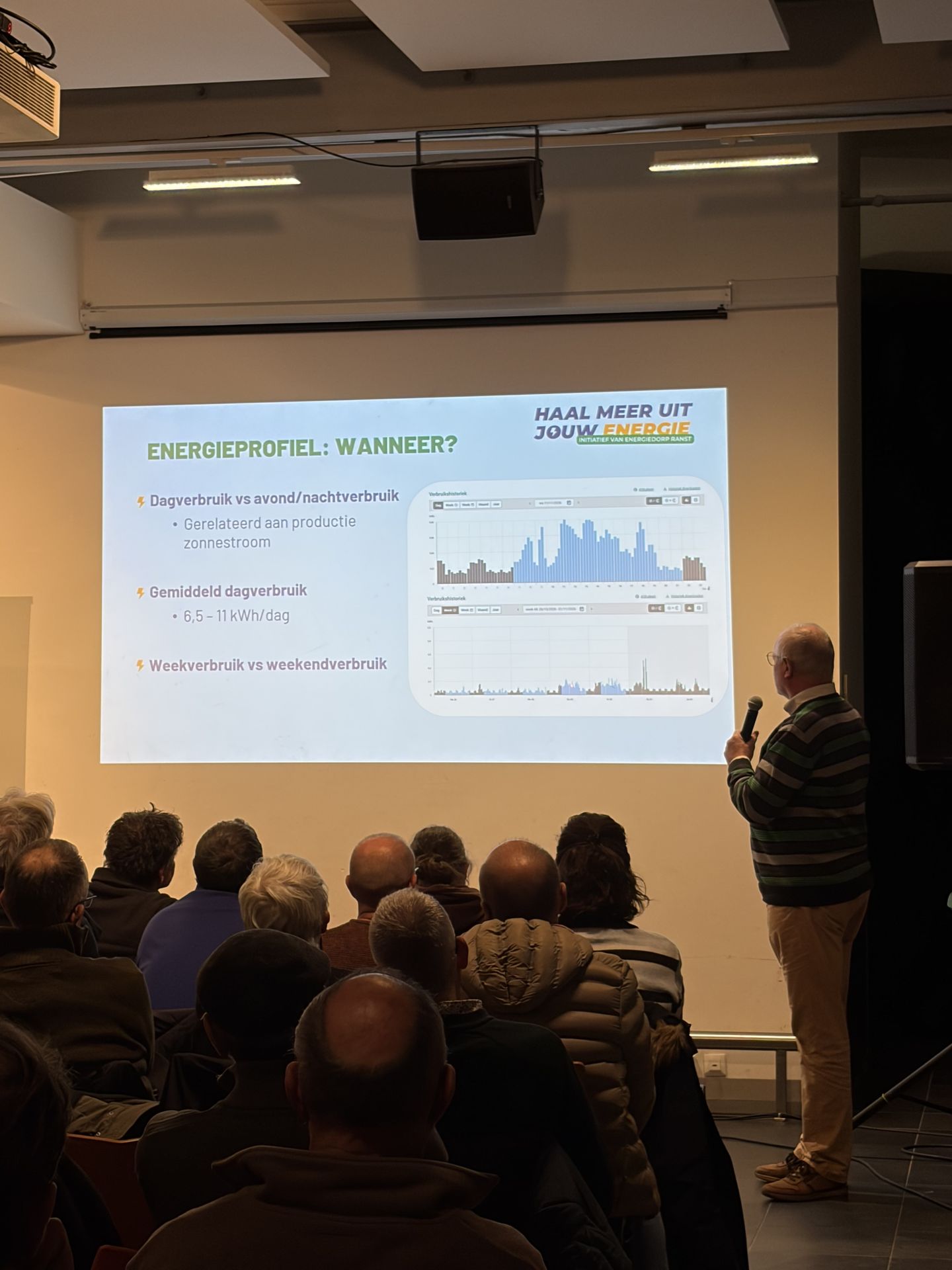
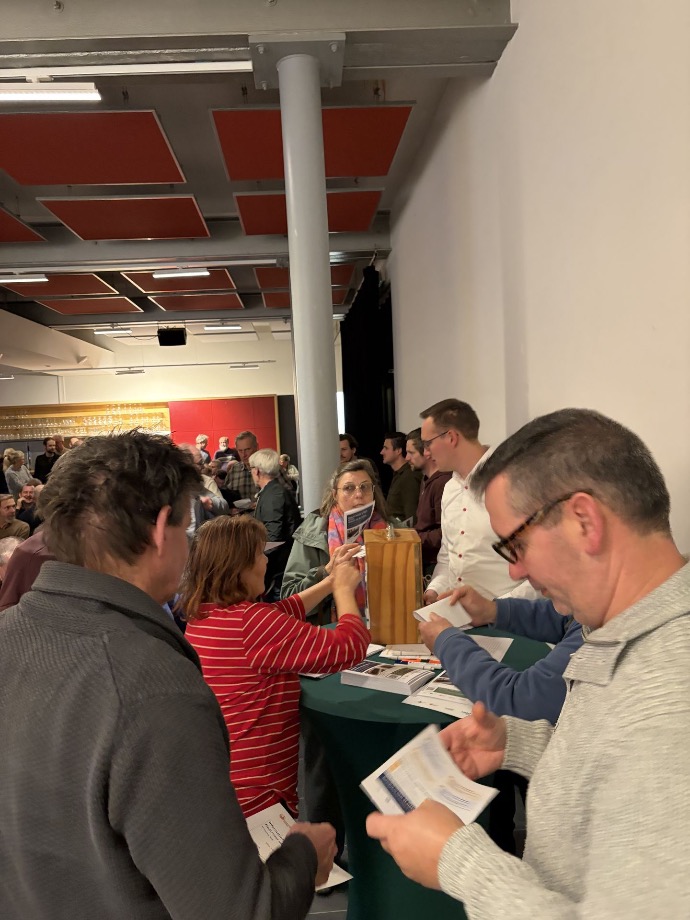
The programme began with a topic close to home for many households: the digital electricity meter. Clear explanations covered what it records, how to interpret its information and how that knowledge can help people make more informed decisions about their electricity use. The capacity tariff and making better use of solar generation were also part of the programme.
Translating complex energy information into everyday language gave residents a starting point for considering changes in their own homes. That accessible approach also prepared the ground for the evening's highlight: the presentation of the group purchase.
A group purchase created by residents for residents
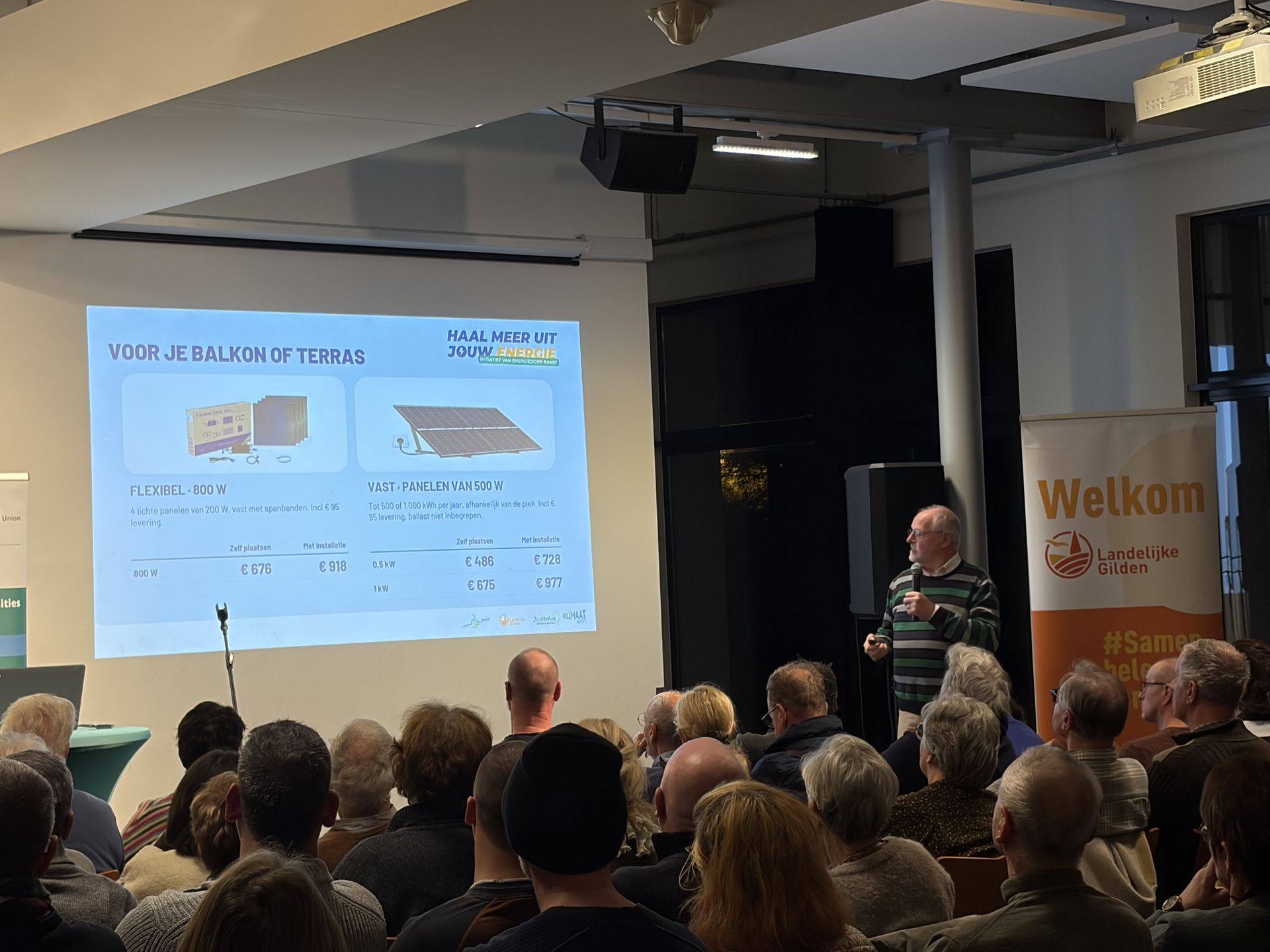
The group purchase put the volunteers' ideas into practice. Developed through the CIRCUS process and discussed with the municipality, it offered a concrete opportunity for residents to take a shared step towards more sustainable energy use.
The group purchase was brought forward with support from energy cooperative ZuidtrAnt and Klimaatwerf vzw. During the evening, independent explanations covered how the technologies work, their potential benefits and the limitations or conditions to consider. The offer was presented alongside those considerations, helping households assess whether it suited their circumstances.
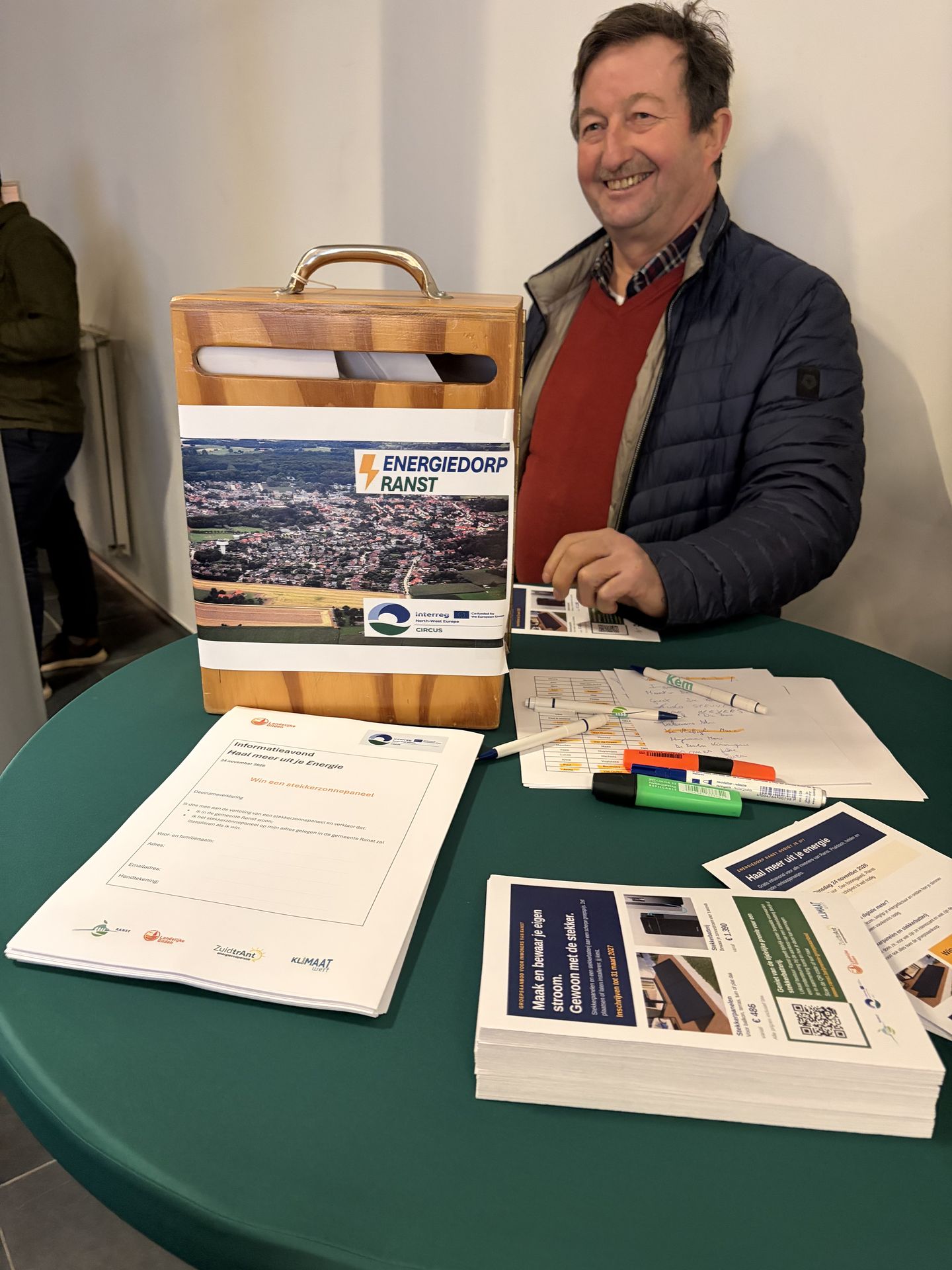
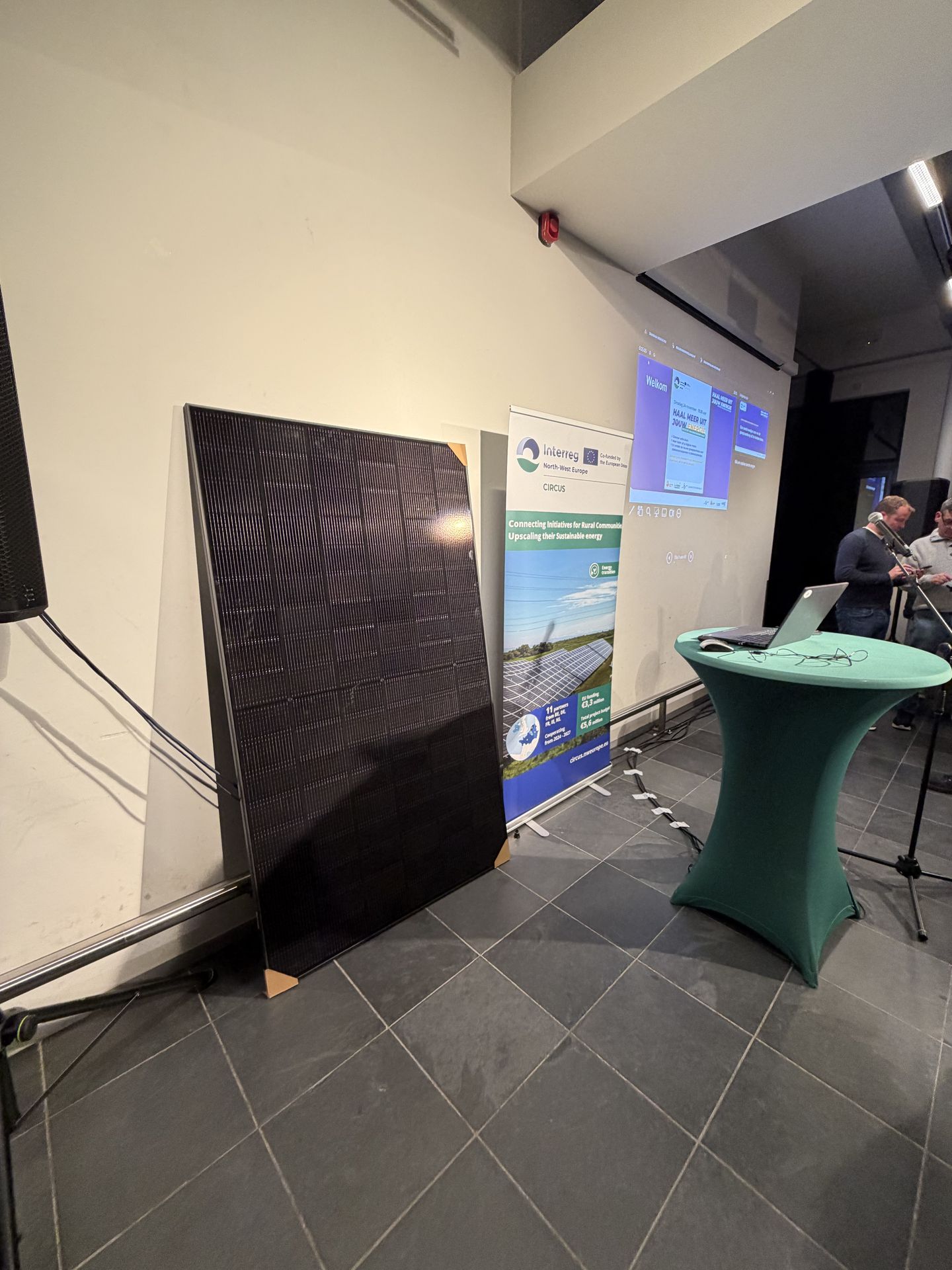
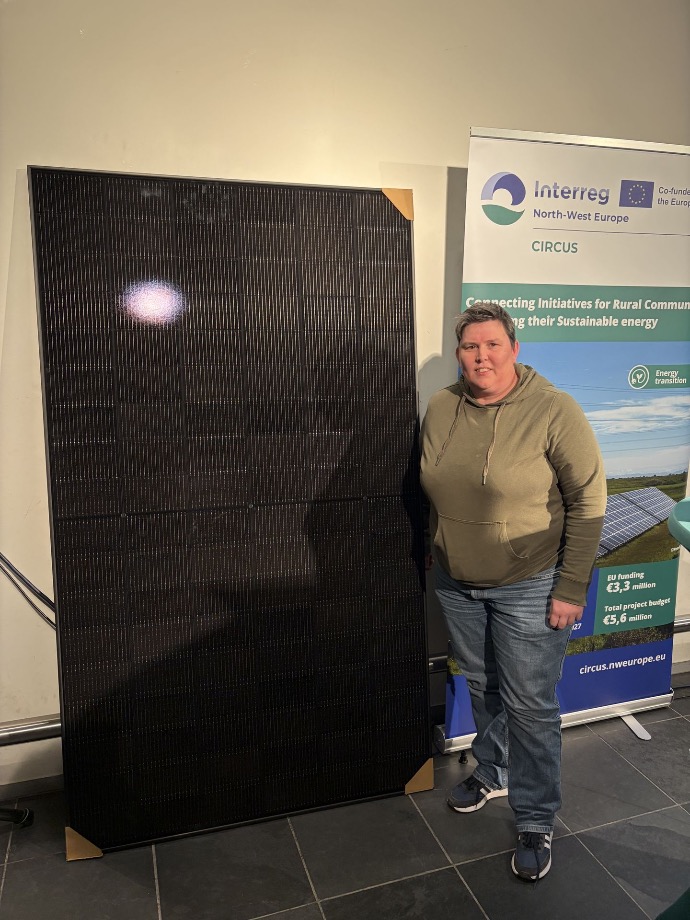
Attendees also had the chance to win a plug-in solar panel of their own, adding a welcome extra to an evening full of practical information.
Municipal support helps more households take part
The municipality of Ranst helped give the initiative broader local backing. Its support includes a financial contribution for eligible households with lower incomes participating in the group purchase, helping reduce the upfront cost for residents who need that assistance.
By working with residents on a proposal developed through CIRCUS, the municipality helped connect local initiative with Ranst's climate plan. Combining clear information with targeted financial support helps make the next step more accessible to households that might otherwise face barriers.
What other CIRCUS communities can learn from Ranst
Ranst shows how the CIRCUS method and tools can help a pilot community move
from exploring local energy needs to developing a proposal with municipal support. Participation shaped the initiative, the cooperation around it and the evening
that brought it to a wider public.
Through CIRCUS, Ranst's experiences are shared with partners across North-West Europe. They offer a useful approach for other communities: connect a question residents already face with a practical opportunity to act, and support the people willing to organise it. These lessons are relevant to groups exploring a cooperative,
a formal energy community or another form of local energy cooperation.
The packed hall made the reach of that shared effort visible. It was an achievement
the volunteers, the municipality and their partners could be proud of,
and a practical example of how CIRCUS can help communities build support around
an energy initiative of their own.